Craps at 1Win: Pass Line, Odds and Etiquette
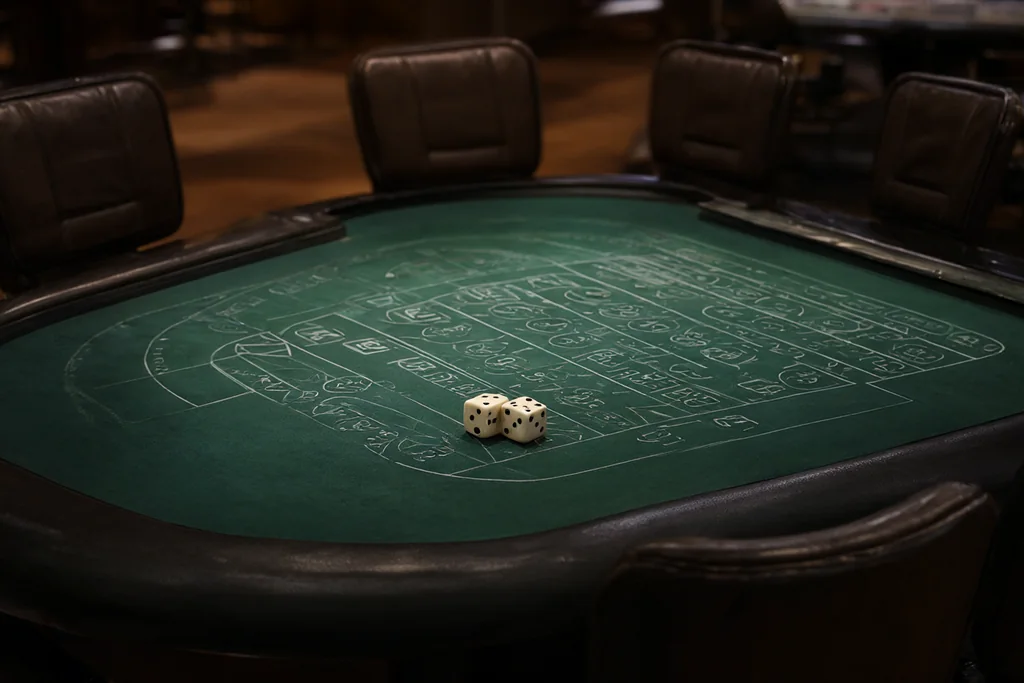
Craps looks like the most complicated table in the casino and is actually one of the simplest once you know that only two bets matter. Everything else — the proposition bets in the middle of the layout — is priced in the house's favour by a wide margin. Players who understand the pass line and the odds bet are playing a game with one of the lowest edges available anywhere on the floor.
This guide explains the two phases of a round, the bets worth making, and why the loudest bets on the table are the worst ones.
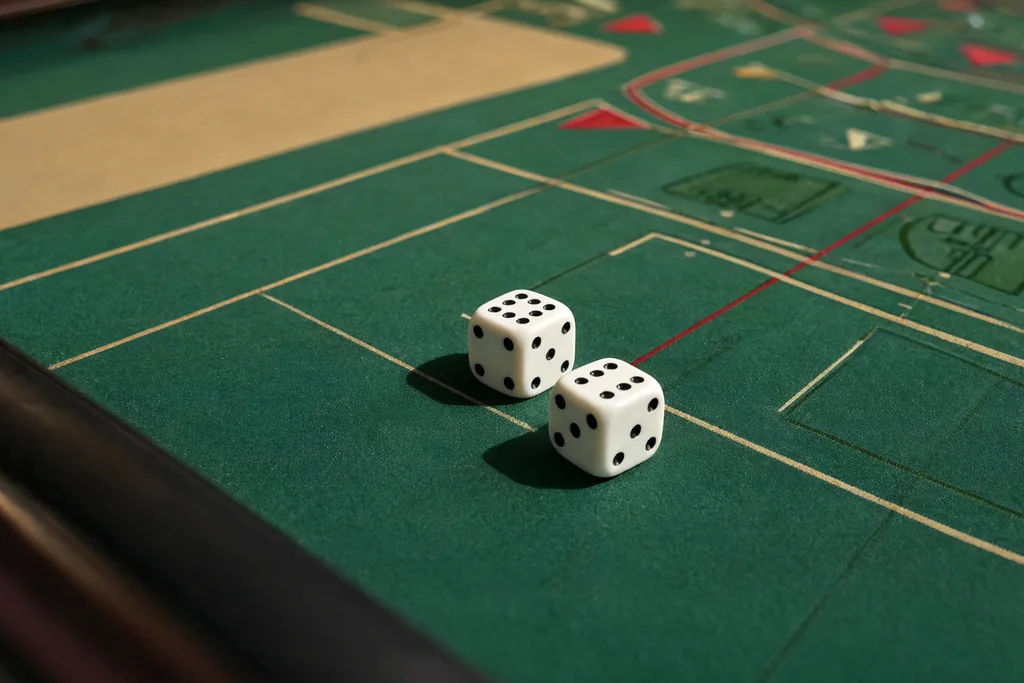
Two phases: come-out and point
A round starts with a come-out roll. If the shooter rolls 7 or 11, the pass line wins immediately; if 2, 3 or 12, it loses. Any other number becomes the point, and the round enters its second phase: the shooter keeps rolling until the point repeats (pass line wins) or a 7 appears (pass line loses).
That is the entire game. Everything else on the layout is an additional bet placed around those two outcomes.
The bets that are worth it
| Bet | How it wins | Why it is used |
|---|---|---|
| Pass line | 7 or 11 on come-out, or the point repeating | Simplest bet; edge of roughly 1.4% |
| Don't pass | 2 or 3 on come-out, or a 7 before the point | Similar edge, opposite side; 12 pushes |
| Odds bet | Paid at true odds behind the pass line | Carries no house edge; the best bet on the table |
| Come / don't come | Same as pass line, but during the point phase | Lets a player start a second number |
Why the centre of the table is expensive
Proposition bets — any seven, any craps, hardways, the various one-roll combinations — pay attractively and cost accordingly. Their edges typically run several times higher than the pass line, and some are worse than that. They are entertainment priced as entertainment; nothing is wrong with them if the cost is understood.
Bankroll and table limits
Craps moves fast: a full table can resolve dozens of decisions in a few minutes. Limits are set per bet, and the odds bet is usually capped as a multiple of the flat bet — that cap, not the minimum, decides how much the low edge is actually worth to you. A player who cannot afford the odds bet is playing the pass line alone, which is still a reasonable game.
- Minimum — the smallest flat bet, usually what the table card states.
- Maximum — the largest bet allowed, often capped per player.
- Odds multiple — how much can be added behind the line at true odds.
The etiquette that confuses newcomers
Dice must hit the back wall, and players are expected to keep their hands off the table while the dice are in motion. Bets are placed in specific areas of the layout rather than handed to the dealer, and the dealer's word settles disputes. Understanding this removes most of the intimidation of a busy table.
What to remember
Craps rewards a narrow strategy: pass line, odds behind it, and discipline about the centre of the layout. The game's reputation for complexity comes from the betting menu, not from the rules, and the rules take one round to learn.
For the rest of the table-game lineup see the casino guide; the mechanics of house margin are explained in the roulette guide, and card values in the baccarat guide.
Ready to play?
Register with your own details and check the current offer terms.